 Freight Allocation
 Real-time Visibility
 Time Slot Management
 Performance & Market Reports
 Agriculture
 Steel & Construction
 FMCG
FMCG Automotive
 Paper & Packaging
 Retail
 Wood & Furniture
 Case Studies
 Blog
Blog Reports


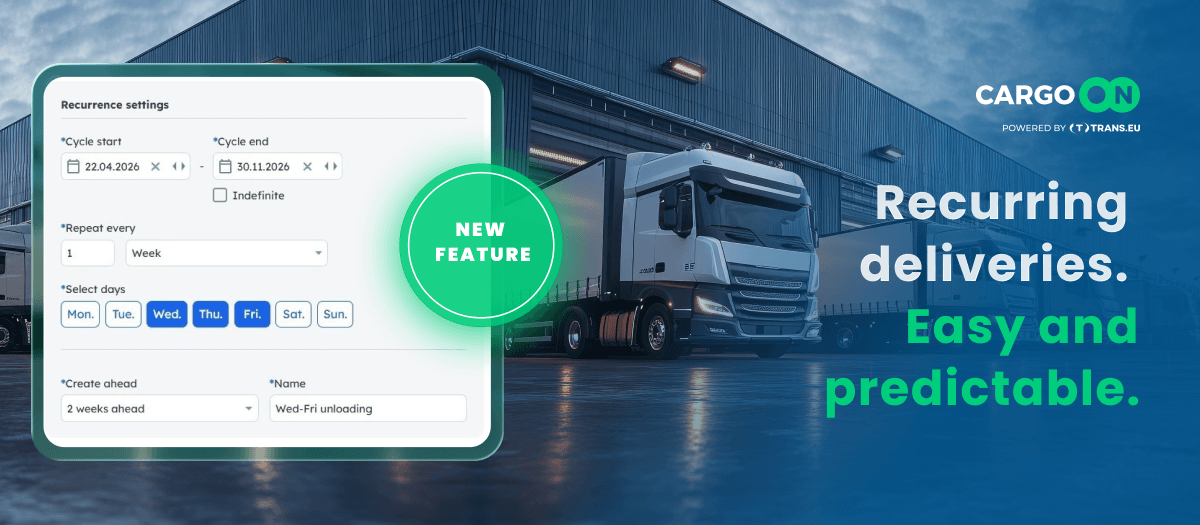
Recurring time slots for your key customers with CargoON new feature
In FMCG or retail distribution, many transport processes follow fixed, repeatable patterns. Milk runs, just-in-time deliveries, and regular supplier shipments arrive at predictable intervals, forming the backbone of warehouse operations.
These recurring flows are essential to keeping goods moving efficiently through the supply chain. However, while deliveries follow a predictable schedule, managing their scheduling often requires repeating the same manual tasks.
To minimize admin work and ensure reliable service for your key customers we introduced an additional feature to our time-slot management system: recurring time slots.
The Hidden Cost of “Business as Usual”
In large-scale warehouse operations, even predictable deliveries require ongoing coordination. Each recurring shipment must still be scheduled – often repeatedly – despite following the same patterns.
Even when using bulk time-slot scheduling, warehouse teams still need to:
- recreate similar time slots
- adjust schedules to reflect operational changes
- verify availability across docks and resources
- resolve delivery conflicts as they arise
This leads to repeating the same tasks, increases the workload of warehouse managers, and makes it difficult to ensure consistent time slots for customers operating on predictable schedules.
Why Recurring Deliveries Need a Different Approach
Retail logistics operates on predictable delivery patterns, but scheduling tools do not always reflect this reality.
Major clients and suppliers operating on fixed routes and at defined frequencies need regular access to time slots at consistent intervals. Without this, delivery coordination becomes more complex and requires more effort.
At the same time, warehouse managers need:
- visibility into future dock capacity
- stable and repeatable scheduling structures
- the flexibility to adjust plans without disrupting existing operations
Automate Recurring Scheduling
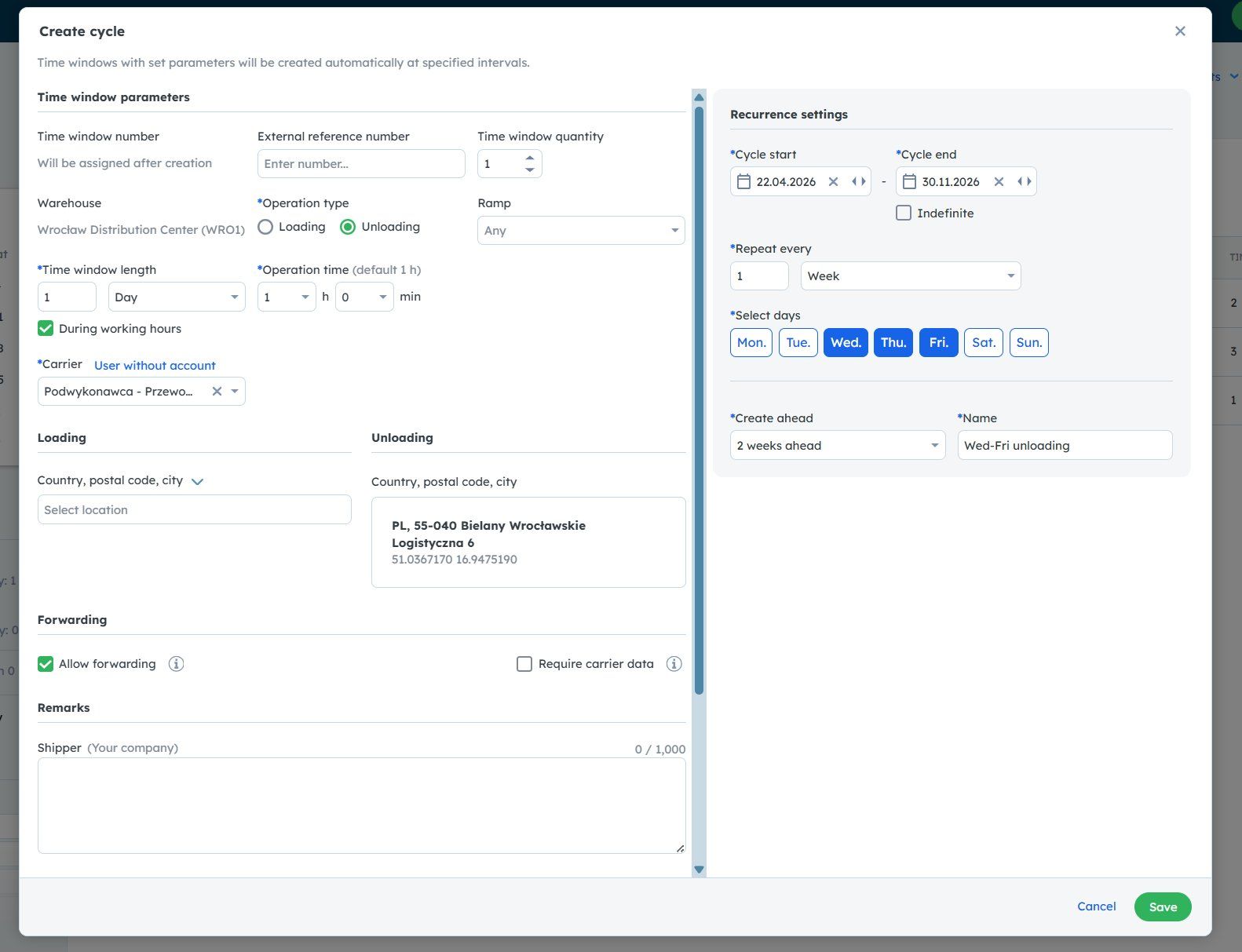
CargoON’s Recurring Time Slots introduce a structured approach to handling repeatable scheduling patterns. Instead of manually recreating the same setup, users can define scheduling rules once and apply them across future deliveries.
This includes the ability to:
- create recurring time slot cycles (e.g., daily, every X days or weeks)
- set an end date for the cycle or make it ongoing
- define the parameters of generated time slots
- decide how far in advance time slots should be created
- edit or delete cycles and individual time slots
- manage access (edit or view-only)
- filter time slots by carrier, operation type, or cycle range
Once configured, time slots are generated according to these rules, reducing the need for repeated manual input.
This approach helps eliminate repetitive tasks, minimizes the risk of errors, and ensures that recurring deliveries are consistently supported within the schedule.