CargoOn > Resources > Blog > Congestion at the loading dock: technology can help recover lost time
Congestion at the loading dock: technology can help recover lost time
Across Europe, trucks wait 3–4 hours on average to be loaded or unloaded, and every idle hour costs €30–70. We look at why rigid electronic time slots can make queues worse, how real-time ETA, yard management systems and AI turn data into action, and why an efficient dock still starts inside the warehouse.
11/2/2026Author: Marek Szymański
Where the queue begins
Truck queues in front of warehouses are not just a problem for carriers. Every hour of waiting generates costs, disrupts subsequent deliveries and makes warehouse operations harder. Reducing congestion therefore requires not only efficient booking of delivery slots, but also better data exchange, flexible planning and good work organization from the moment a vehicle enters the site until it leaves.
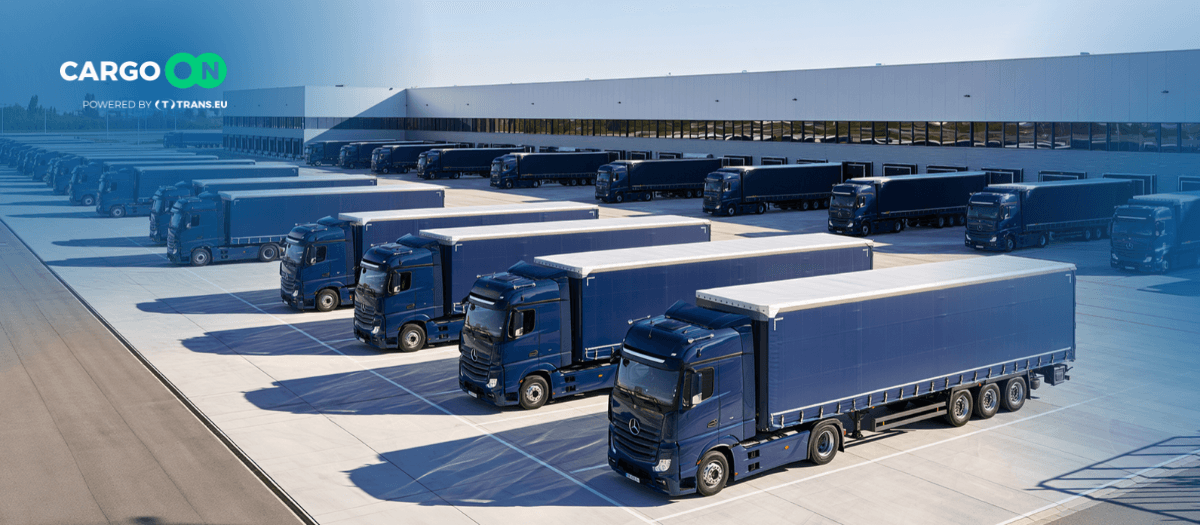
Congestion often starts before the vehicle even reaches the dock. Registration at the gate, waiting for a dock assignment, staff shortages, goods that aren't ready, or a pile-up of scheduled arrivals can quickly throw the schedule off. According to research by CargoON and the Centro Español de Logística (CEL), 70% of carriers in Spain wait more than an hour to be served. The European average, however, is much higher, at 3–4 hours, and trucks sometimes wait in front of warehouses for as long as 10 hours.
The Stratton Institute estimates the direct losses associated with a truck standing idle in the EU at €30–70 per hour. That's only part of the cost, because the delay of one vehicle can push back subsequent stops on the route and reduce the fleet's daily productivity.
The average truck in Europe waits 3–4 hours at the warehouse gate, and some wait as long as 10 hours.
A rigid slot isn't enough
Electronic slot booking on its own doesn't solve the problem. If it works like a rigid list, it can even make things worse. A truck delayed by a traffic jam, a roadside inspection or a previous unloading loses its slot and goes to the back of the queue.
,,
President of the Management Board, Stratton Institute
Wojciech Sokołowski
A system that was supposed to eliminate queues ends up creating them, because it doesn't allow for flexible reallocation of slots in real time.
,,
Another problem is the lack of connectivity and integration between systems. The carrier's TMS and the recipient's booking portal often operate separately, and data has to be entered manually. Each customer may also use its own solution and its own handling rules. As a result, digitalization doesn't always mean a simpler, faster process.
This is why dynamic time-window management is becoming increasingly important. A real-time ETA can allow a warehouse to give a free slot to another vehicle, change the order of service, or prepare the dock and staff in advance. Yard management systems (YMS) can additionally organize traffic in the yard, automate gate registration and direct vehicles to specific docks.
Data must lead to action
Tracking a truck isn't enough either. "Tracking a vehicle's position only shows where the problem is, but doesn't solve it," stresses Łukasz Muzyka, Product Manager and expert in technology systems at Trans.eu Group. Information about a vehicle's arrival only has value when the warehouse can use it to change its work plan, prepare the right dock, or move staff to where they are needed most.
This is where predictive analytics and AI come in. Such solutions can forecast arrival times, detect deviations from the schedule and flag events requiring a response more quickly. Their importance is growing especially in facilities that handle many vehicles every day, frequently change plans, and have a limited number of docks or workers.
Implementation examples show that better transport visibility can deliver measurable results. At Smithfield Foods, using real-time shipment location data was associated with an increase in on-time delivery from 87% to 94%. Gartner, meanwhile, forecasts that by 2027, half of companies with warehouse operations will be using AI-powered vision systems.
An efficient dock starts in the warehouse
Technology cannot, however, replace good work organization. Goods should be ready before the vehicle arrives, and staffing should match actual traffic peaks. One solution is pre-picking, i.e., preparing the shipment in advance. According to Łukasz Muzyka, this can cut a vehicle's time at the dock from 45–60 minutes to 15–20 minutes. Flexible schedules for warehouse staff can also help, especially where truck traffic concentrates at certain hours.
,,
Product Manager, expert in technology systems at Trans.eu Group
Łukasz Muzyka
Telematics and ETA are only fuel for the process — the engine is a well-functioning warehouse and flexible staff.
,,
Measuring the entire process is also important. Dwell Time, Turnaround Time and OTIF metrics help pinpoint exactly where time is being lost and whether the source is transport, the warehouse, or goods preparation. Without such data, it's easy to shift responsibility between participants in the process instead of finding the real cause of the delay.
The bottom line
Less congestion, then, doesn't mean a single magic system, but rather a combination of several factors: connected data, flexible planning and efficient work organization. Only then can technology genuinely help shorten truck handling times and improve the flow of goods from loading to unloading.
Want the full picture? Download Market Insights ON #Q4/2026 for free and see how real-time data, flexible slots and AI are helping warehouses cut congestion at the dock.

 Freight Allocation
 Real-time Visibility
 Time Slot Management
 Performance & Market Reports
 Agriculture
 Steel & Construction
 FMCG
 Automotive
 Paper & Packaging
 Retail
 Wood & Furniture
 Case Studies
 Blog
 Reports